The Great Migration of 1947
Looking back at one of the largest mass movements of people in human history, we learn how demographics can be reshaped overnight.
A Turning Point in History
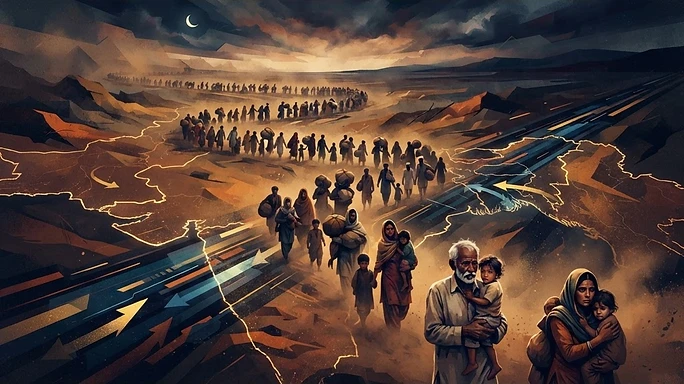
In the shadow of the partition of India in 1947, nearly 15 million people were displaced, marking one of the most significant demographic upheavals of the 20th century. This event was not just a historical footnote; it was a visceral demonstration of how political instability can rewrite the census of an entire region within weeks.
Defining the Human Cost
Migration is often reduced to arrows on a map, but every migration carries the weight of thousands of individual life stories. When we look at the population counts on our dashboard, we must recognize that every shift is a product of human agency and circumstance.
The Lesson for Today
By studying these massive displacements, we learn the importance of social infrastructure. When a population moves, it needs food, shelter, and order immediately. Today's logistics are better, but the humanitarian imperative remains unchanged: people in motion are the most vulnerable people of all.
Connecting to the Present
History is a continuous stream. Many of the population patterns we observe today—from urbanization to voluntary migration—are the long-term echoes of events that began decades or even centuries ago. We are the survivors and the successors of these massive demographic shifts.
Honoring the Count
When we count the people of Earth today, we honor the millions who came before them. History reminds us that behind every aggregate data point is a real person seeking a place to call home.