Inside the Census Bureau
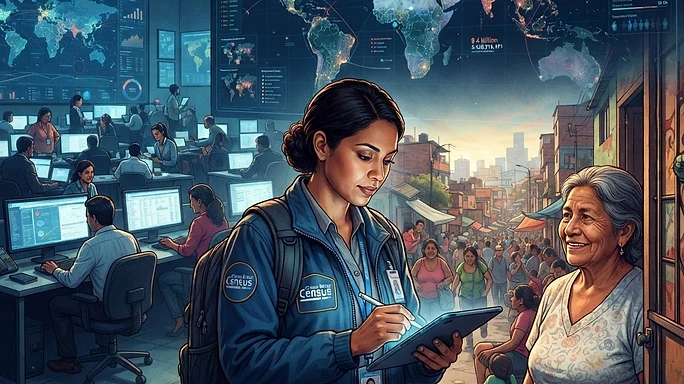
Counting 8.4 billion people is a Herculean task that combines satellite imagery, predictive analytics, and boots-on-the-ground survey work.
The Art of the Count
How do we know how many people are alive on Earth at this very second? It is a complex mixture of traditional door-to-door census taking, modern satellite observation, and sophisticated extrapolation models. Measuring humanity is perhaps the most ambitious project we undertake as a civilization.
The Satellite Lens
Modern census efforts use high-resolution satellite imagery to identify human settlements in areas where physical access is difficult. By counting night-time lights and rooftop density, data scientists can estimate population fluctuations with surprising accuracy, bridging the gaps that traditional surveys cannot reach.
Verification through Analytics
Algorithms verify the data, identifying outliers and cross-referencing death registrations with birth certificates to keep the tally as close to real-time as possible. While no count is perfect, we are more accurate today than at any point in history.
The Role of the Citizen
Every census depends on the willingness of people to be counted. When you fill out your forms, you are contributing to a global data set that defines how resources are allocated, how healthcare is prioritized, and how cities are planned. You are quite literally a part of the count.
Why We Measure
We count not because we want to commodify humanity, but because we want to serve it. Accurate population data allows us to identify where aid is needed, where infrastructure is lacking, and how we are collectively evolving as a species. Your existence is a data point that helps us improve the world.