The Great Migration of the Twenty-First Century
Climate adaptation has triggered one of the largest movements of people in modern history, reshaping borders and identities.
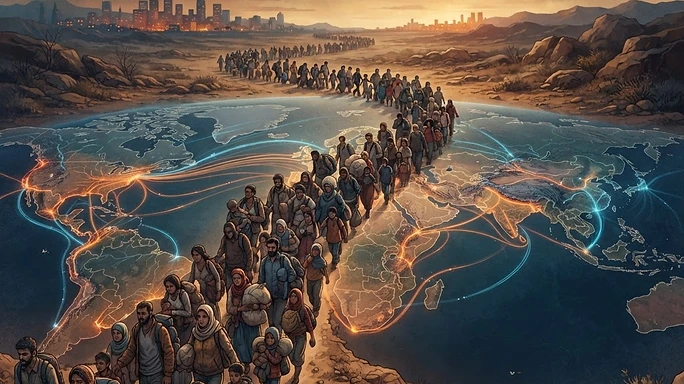
A Changing Map
We are currently witnessing a massive shift in human settlement patterns. Driven by rising sea levels and agricultural desertification, millions are moving away from ancestral lands toward safer, more stable environments. This is not just a trend; it is a geopolitical reality that defines our current era.
Historical Echoes
Throughout history, human populations have always been mobile. From the early migratory routes out of Africa to the industrial-era surges toward cities, movement is inherent to our survival. However, the scale of today's migration, tracked real-time on our dashboards, is unprecedented in its urgency.
The Human Cost
Each data point in this massive movement represents an individual forced to leave home. The transition involves:
- Loss of cultural heritage
- The challenge of integration
- Economic disruption and adaptation
Adaptation and Resilience
Despite the turmoil, the story of migration is fundamentally a story of human resilience. As families move, they carry skills, knowledge, and traditions, enriching the cultures of the regions they inhabit. We are witnessing a global remixing of demographics that will leave an indelible mark on the 21st century.
A Global Perspective
Watching the numbers shift in real-time allows us to observe this movement as a living, breathing process. It serves as a reminder that population metrics are never static; they are the result of conscious choices and necessary reactions to an ever-changing planet.