Designing for the Next Billion Citizens
As we cross new population thresholds, how can urban planners design for inclusivity without compromising efficiency?
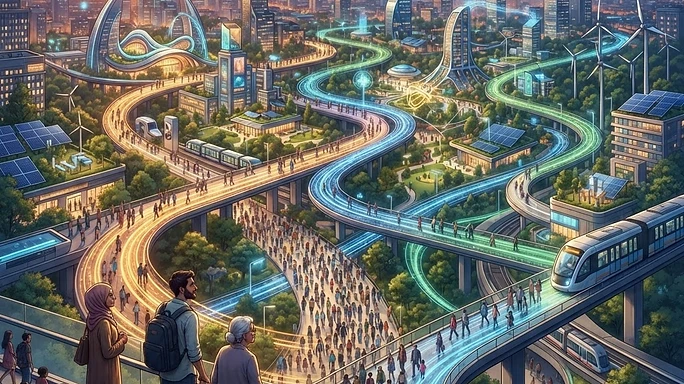
Inclusivity by Design
Designing for a growing population is often confused with designing for maximum capacity. True success, however, lies in inclusivity. As the number of people on Earth trends upward, the design of our public spaces, infrastructure, and information systems must accommodate the most vulnerable members of society.
Universal Design Principles
Urban planning must prioritize accessibility. This includes walkable streets, public transit that serves everyone regardless of income or ability, and shared spaces that foster community. When we design for the most vulnerable, we inevitably create a better, more efficient system for everyone.
Designing for Sustainability
- Water reclamation systems
- Public transit networks
- Distributed power grids
These elements are critical to managing a growing population. They turn a crowd into a community by ensuring that the fundamental needs of every human are met with minimal impact on our collective future.
The Intersection of Data and Space
Just as we use population counts to monitor growth, planners use this same data to allocate resources. The relationship between our demographic dashboard and physical infrastructure is symbiotic. Data informs the design; the design shapes the movement of the population.
A Shared Vision
As we move forward together, we must remember that the people behind the numbers are the heart of the design. The goal of our work is to ensure that as the world grows, it does so in a way that provides dignity, opportunity, and comfort to every individual on this crowded, beautiful planet.